Planning an accessory dwelling unit in the Bay Area comes with many decisions, but for most homeowners, the financial picture remains one of the most challenging to decode. Construction bids often focus on the obvious line items — framing, concrete, finishes — while leaving out the full range of costs that shape a real project budget. ADU Builders Bay Area is addressing this gap by helping San Jose area homeowners understand what goes into an accurate ADU cost estimate, from the first design concept through construction completion.
The company, which serves homeowners throughout the Bay Area and greater Silicon Valley, takes a transparent approach to project budgeting. Rather than presenting simplified figures that leave clients unprepared for the full scope of investment, ADU Builders Bay Area walks homeowners through both hard and soft costs, explains where contingencies belong in a sound budget, and helps clients set expectations that reflect real-world project conditions before any ground is broken.
As accessory dwelling unit construction continues to grow across California, many homeowners enter the planning process with incomplete cost information. Understanding how a budget is structured — and why — gives homeowners the clarity needed to make confident decisions about their ADU projects.
Hard Costs: The Physical Work of Building an ADU
Hard costs represent the direct construction expenses required to build an accessory dwelling unit. These are the tangible, measurable expenditures tied to labor and materials — the items most homeowners picture when they think about a construction budget.
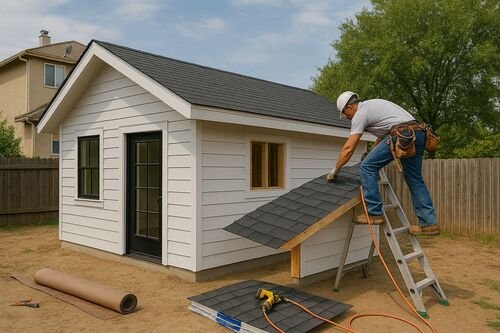
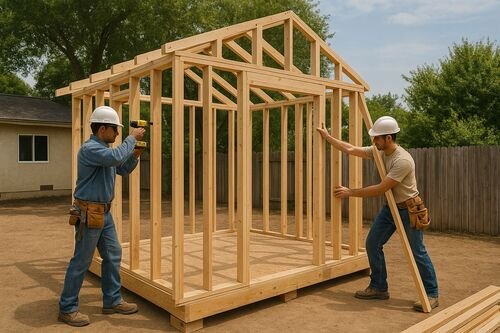
In a typical Bay Area ADU project, hard costs include site preparation and grading, foundation work, framing, roofing, exterior siding and finishes, windows, doors, insulation, drywall, interior finishes, cabinetry, flooring, plumbing fixtures, electrical systems, HVAC installation, and mechanical systems. For a detached ADU built from the ground up, each of these categories contributes substantially to the total build cost.
Hard costs vary considerably depending on the type of ADU being built. A garage conversion involves different structural considerations than a new detached backyard cottage. An attached ADU sharing a wall with the main home may require acoustic separation, fire-rated assemblies, and coordinated utility connections that affect cost. Junior ADUs converted within existing floor plans can carry lower hard costs but still require full compliance with California building codes.
Labor costs in the Bay Area also tend to be higher than state averages, reflecting the region’s construction workforce market. Material costs fluctuate with supply chain conditions, and premium finishes can add significantly to base construction figures. ADU Builders Bay Area helps homeowners distinguish between standard specifications and elective upgrades so that budget conversations remain grounded in realistic scope.
Site-specific conditions introduce additional hard cost variables. Properties with challenging access, steep slopes, expansive soils, aging utilities, or limited setbacks may require engineering solutions, retaining walls, excavation, or utility rerouting that meaningfully changes the project’s cost profile. Evaluating these factors early prevents surprises later in the construction process.
Soft Costs: The Expenses Behind the Build
Soft costs are the non-construction expenses required to take an ADU from concept to permitted plan to completed project. These costs are frequently underestimated or omitted from preliminary budget conversations, which can lead to significant gaps between initial estimates and actual project totals.
Architectural design fees, structural engineering, energy compliance documentation, soil reports, Title 24 calculations, and surveying all contribute to soft costs. In California, ADU projects must meet specific energy efficiency requirements, and preparing the documentation to demonstrate compliance requires licensed professionals whose fees belong in the project budget.
Permit fees vary by jurisdiction and are calculated differently across Bay Area cities and counties. San Jose, for example, applies permit fees based on project valuation, which means larger or more complex ADUs carry higher permit costs. School impact fees, utility connection fees, sewer capacity charges, and plan check costs can collectively add a meaningful amount to a project’s total soft cost load.
Project management fees, construction insurance, and financing costs also fall into the soft cost category. Homeowners who finance their ADU through construction loans, home equity lines, or refinancing products should account for loan origination costs, interest carry during construction, and closing costs as part of the full financial picture.
ADU Builders Bay Area educates clients about these costs during early project discussions. By presenting a comprehensive soft cost estimate alongside the hard cost projection, the company helps homeowners arrive at a total project budget that reflects genuine expectations rather than a best-case scenario.
In the middle of this planning process, homeowners considering ADU construction in the Bay Area can explore project guidance, service offerings, and design support by visiting ADU Builders Bay Area, where resources are focused on helping California property owners build with clarity and confidence.
Contingency Planning and Why Budgets Need Flexibility
Even the most carefully developed ADU budget should include a contingency reserve. A contingency is not a prediction of problems — it is an acknowledgment that construction projects involve real-world conditions that cannot always be fully anticipated during the planning phase.
Standard industry practice for residential construction is to include a contingency of ten to fifteen percent of the total project cost. For older properties, sites with limited prior documentation, or projects involving significant existing structure modification, a higher contingency may be appropriate. This reserve exists to absorb cost changes that arise from unforeseen site conditions, plan modifications, material substitutions, or regulatory requirements that emerge during permit review.
In the Bay Area, some of the most common sources of contingency use include discovery of deteriorated subfloor or framing during a garage conversion, unexpected utility depths or configurations, permit-driven design changes, and changes in material availability or pricing during a project’s construction phase. None of these situations are unusual — they are simply the nature of construction work on real properties.
Homeowners who budget without a contingency and then encounter these situations face a difficult choice: absorb unexpected costs without financial preparation, or pause the project while additional funding is arranged. ADU Builders Bay Area advises against either outcome by building contingency planning into the initial budget framework from the start. A well-structured contingency is not extra cost — it is responsible financial planning for a construction project of meaningful scope.
Understanding Cost Per Square Foot in a Bay Area Context
Cost-per-square-foot figures for ADU construction are widely cited and frequently misapplied. A number pulled from a regional average or a national source may have little relevance to a specific site in San Jose, Santa Clara, or Fremont. Understanding how this metric works — and where it breaks down — helps homeowners use it more accurately.
In general, smaller ADUs tend to carry a higher cost per square foot than larger units. This happens because certain fixed costs — foundation work, utility connections, permits, design fees, kitchens, and bathrooms — are spread over a smaller floor area. A 400-square-foot studio ADU will often have a higher cost per square foot than a 900-square-foot one-bedroom unit, even if the latter is a more expensive project in total.
Finish level also heavily influences per-square-foot cost. An ADU designed for rental income might prioritize durability and functionality over premium aesthetics, while a multigenerational living space for a family member might incorporate higher-end finishes, custom cabinetry, or specialized accessibility features. Both are valid choices with different cost implications.
ADU Builders Bay Area discusses per-square-foot cost expectations in the context of each client’s specific project type, site, and desired finish level. The goal is to give homeowners a meaningful number tied to their situation, not a generic estimate that may create false confidence or unnecessary alarm.
Phasing and Value Engineering for Budget-Conscious Homeowners
Not every homeowner is prepared to tackle a fully finished ADU in a single project phase. For some, budget constraints require creative thinking about how to sequence work or identify areas where cost can be reduced without compromising the unit’s liveability or long-term value.
Value engineering is the process of reviewing a project’s scope and specifications to identify where costs can be trimmed without losing function or durability. This might mean selecting equivalent materials at a lower price point, simplifying a floor plan to reduce framing complexity, or choosing a standard window package rather than custom-sized units. It can also involve adjusting finish schedules so that a unit is completed to a livable standard initially, with upgrades added over time.
Phasing allows some homeowners to move forward with permitted construction while deferring certain interior finishes or landscaping until a later date. This approach requires careful planning to ensure that phased work can be completed without triggering additional permit processes or creating code compliance issues.
ADU Builders Bay Area works with homeowners to identify where flexibility exists in their project scope and where cutting costs would create problems down the road. Not all savings are equal — some trades offer legitimate value engineering opportunities, while others involve compromises that increase long-term maintenance costs or reduce the unit’s appeal to future tenants or buyers.
Financing, Return on Investment, and Long-Term Budget Thinking
Understanding ADU costs in isolation is useful, but placing those costs within a longer-term financial framework gives homeowners a more complete picture. An ADU that costs a significant amount to build may generate rental income that recoups that investment over several years, increases property value, or reduces household expenses by allowing family members to share housing costs.
California homeowners exploring ADU financing options commonly consider home equity lines of credit, cash-out refinancing, construction loans, ADU-specific loan products, and personal savings. Each financing structure carries its own cost, timeline, and qualification requirements. The cost of financing itself — interest, fees, and the time value of money during construction — belongs in the full budget picture.
Rental income potential varies significantly by location, unit size, and finish quality. In high-demand Bay Area submarkets, a well-built ADU can generate monthly rental income that meaningfully offsets mortgage or loan costs. Property value increases from adding a legal dwelling unit also contribute to the return on investment equation, particularly in markets where additional units are scarce.
ADU Builders Bay Area helps homeowners think through these financial dimensions as part of the planning process, connecting ADU cost discussion to the broader goals that motivated the project in the first place. A well-budgeted ADU built with transparency and accuracy from the start puts homeowners in the strongest position to achieve those goals.
About ADU Builders Bay Area
ADU Builders Bay Area is a San Jose based accessory dwelling unit builder serving homeowners throughout the Bay Area. The company provides ADU design, planning, permitting, and construction services for detached ADUs, attached ADUs, garage conversions, junior ADUs, backyard cottages, in law units, and custom secondary housing structures. Its work is centered on local expertise, efficient project delivery, and functional residential design for California homeowners.
ADU Builders Bay Area
111 N Market St suite 378
San Jose, CA 95113
United States